
The Four Things Every Outdoor Classroom Needs


Often when we bring up the idea of an outdoor classroom, clients imagine amphitheater-like seating or some heavily programmed space. And yes, those types of rooms without walls can serve a purpose, but an outdoor classroom can be much simpler. Not a room, but a relationship—one between students, teachers, and the environment
Match the Classroom to the Class
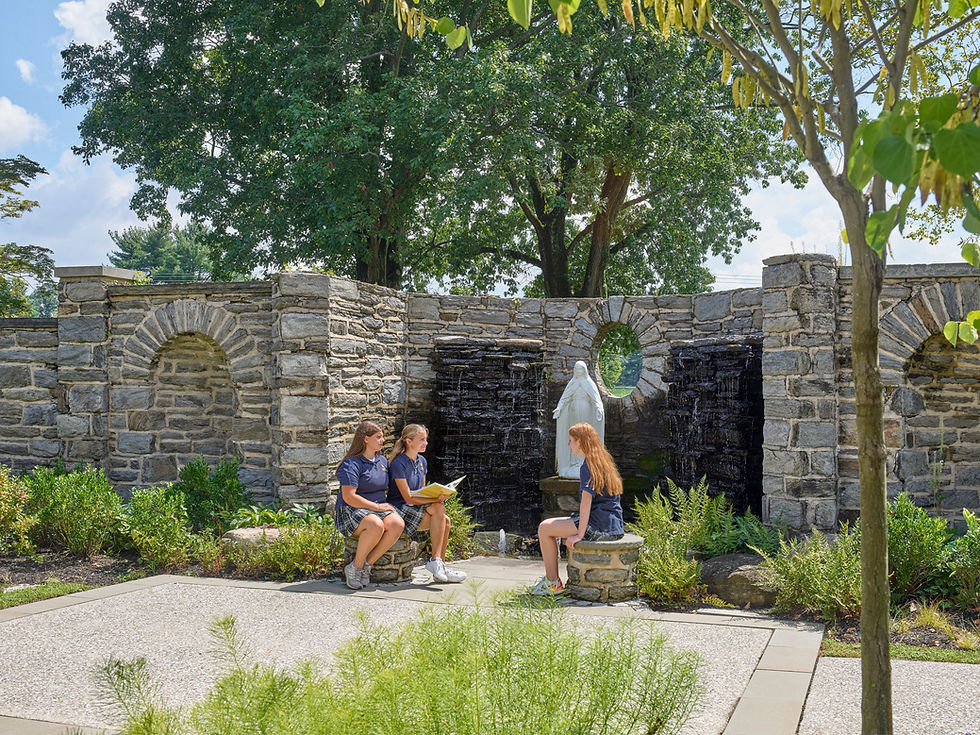
There's no single solution for designing an outdoor classroom. But there are some general that work no matter who you're designing for:
A clear focal point — This doesn't need a formal amphitheater pointed toward some stage. It can be created with a set of steps, an upper patio, or a rear wall with a feature that draws attention and frames the space.
Defined seating – Again, this doesn't need to be formal. We've had a lot of success using logs, stumps, and boulders, in addition to wooden benches. These have the added benefit of working as play structures.
Contained perimeter – Provides a sense of safety and privacy without obstructing views. This ties into the prospect-refuge theory of landscape design, which suggests humans are drawn to landscapes that offer both a view and shelter. In an outdoor classroom, it might look like a dense band of planting, topographical change, or building edge.
Thoughtful Planting — Durability and variety are critical for an active learning landscape. Plants closest to active learning areas need to withstand curious hands and constant traffic. More delicate, tactile, or sensory species can sit just beyond the busiest zone—close enough to invite discovery. Taller plants at the outer edge can create that sense of refuge.
But there's still a lot of room for creativity within this structure.
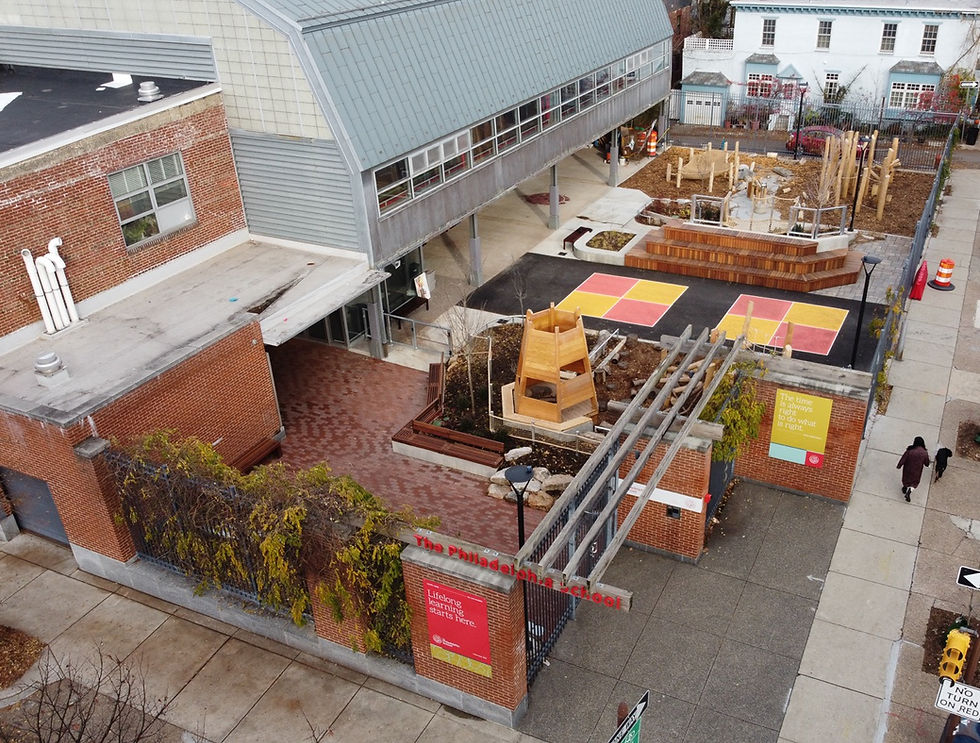
At The Philadelphia School, we transformed an asphalt play yard into a nature-based playground for outdoor learning. At its center, a versatile custom-made seating area points toward a central "stage." This area serves as a small outdoor classroom—or theater or arena or climbing structure or anything else kids can think of. Trees and durable native plants evoke the nearby Wissahickon landscape, with persimmons and other edible species introducing students to natural food sources. And though fences are necessary in this small urban school, rapidly growing climbing plants will soften the contained perimeter.
These four principles also apply to higher education, though a looser framework is more appropriate. We think of these spaces less as classrooms and more as open forums. College students may use one for a seminar one hour, a club meeting the next, and an afternoon of studying or socializing after that.
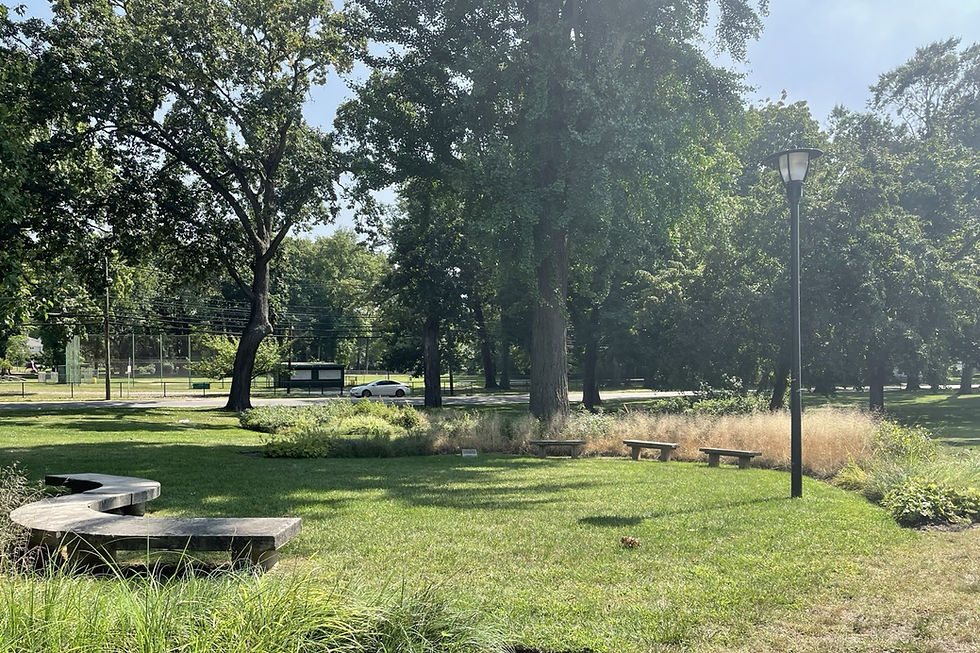
Outside Fairleigh Dickinson University’s library, mature shade trees already made the lawn a natural place to gather. We created a defined perimeter with beds of layered perennials and added a variety of seating to create smaller "rooms" in the landscape while reinforcing the campus's overall native planting strategy. It's a place that implies a use without dictating one.
Integrate the Classroom into the Curriculum
One problem with these spaces is that they look good on a campus master plan or site plan but might sit empty once the novelty wears off. That's why outdoor classrooms can't be single-use spaces. If a classroom is only useful during a scheduled lesson, then weather conditions or a change in curriculum can take it out of circulation. The better approach is to weave outdoor learning into spaces that the school already uses: playgrounds, courtyards, library lawns, gardens, and the paths between buildings.
At The Philadelphia School (mentioned above), the wood seating structure doesn't remain unused until a teacher decides the conditions are perfect for outdoor learning, it's already a part of the everyday landscape.
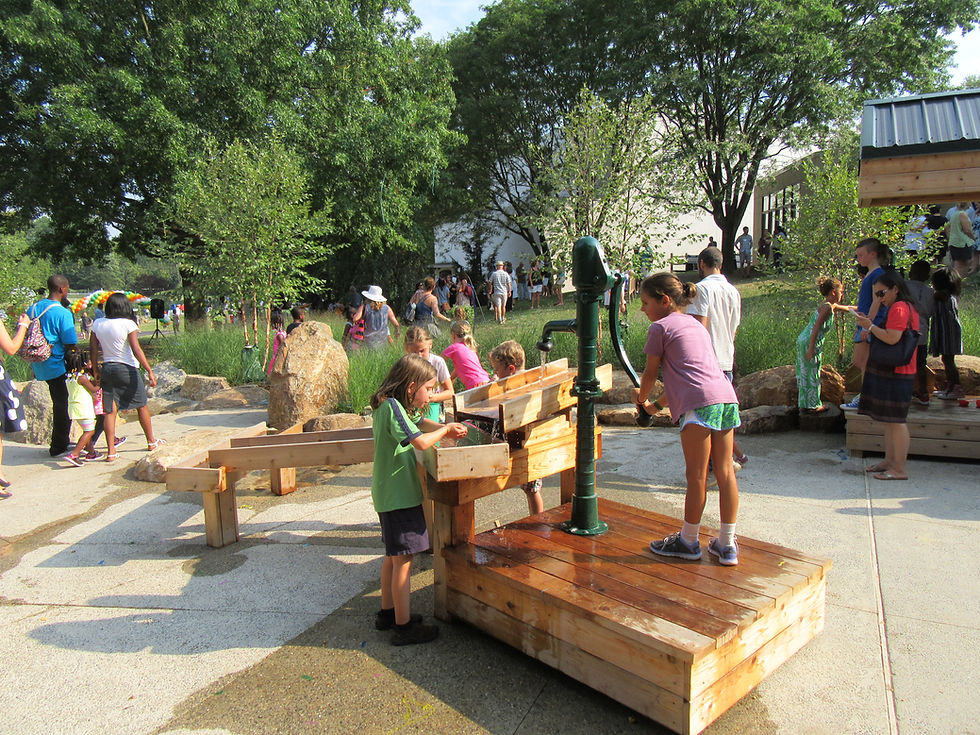
At some schools, the classroom more directly reflects the curriculum. At Abington Friends School, where the campus is an arboretum, the Headwaters Discovery Playground supports the school’s broader commitment to environmental education and stewardship. In the natural "free-play" landscape we designed, students engage with ecological systems, including the water cycle. A hand pump and connected troughs allow them to redirect water, create channels, and watch how water interacts with the environment.
Design for Landscape Stewardship
Whether the outdoor classroom supports conventional teaching outdoors or uses the natural world as part of the curriculum, if an outdoor classroom is well designed, students gain benefits such as improved focus, retention, and engagement, plus emotional and mental health benefits, including reduced stress.
Obviously, we think outdoor classrooms are wonderful. We love designing them, and we hope to build many more. But the real goal isn't building outdoor classrooms; it's building relationships between learner and landscape. The sooner we can introduce the natural environment to education, the better the chance we have of creating the next generation of stewards.


